Screening and tests
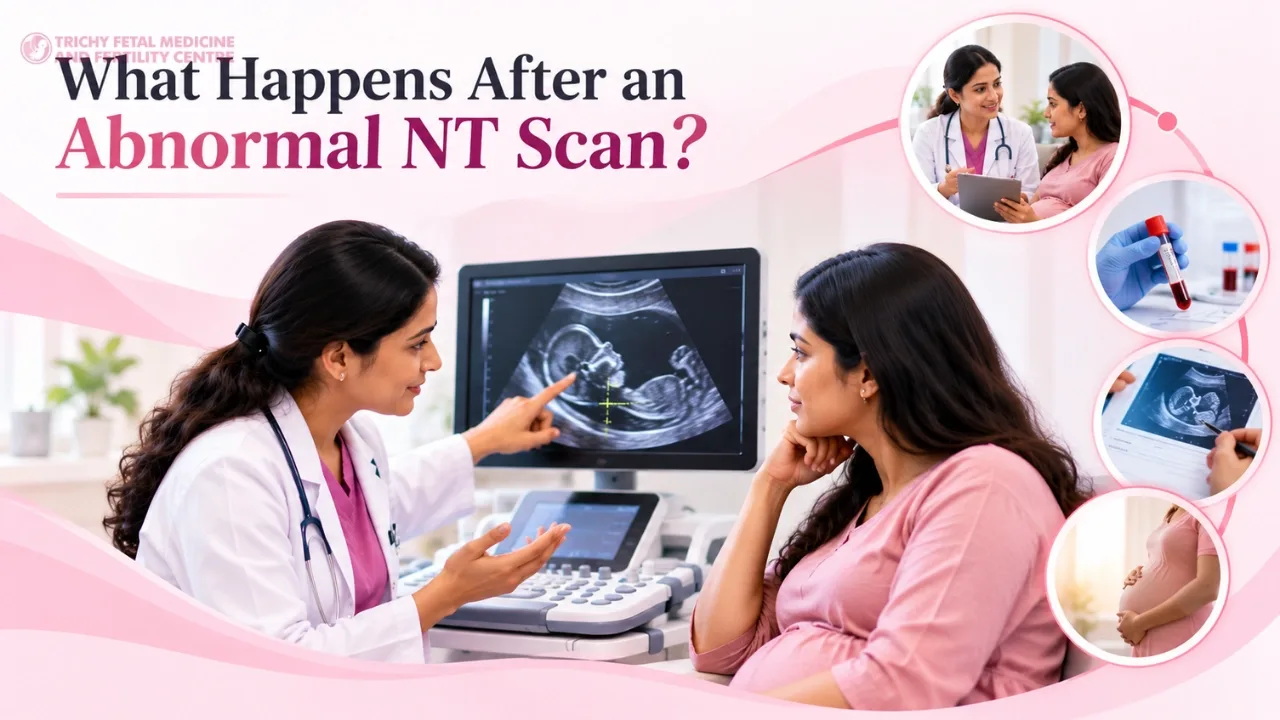
What Happens After an Abnormal NT Scan?
An abnormal NT scan raises a question and does not give a final answer. Here is how doctors usually work through it, step by step.
Reviewed24 October 20268 min read

A high-risk NIPT result means the baby has a higher chance of a chromosomal condition, not a diagnosis. Learn why false positives happen and what testing comes next.
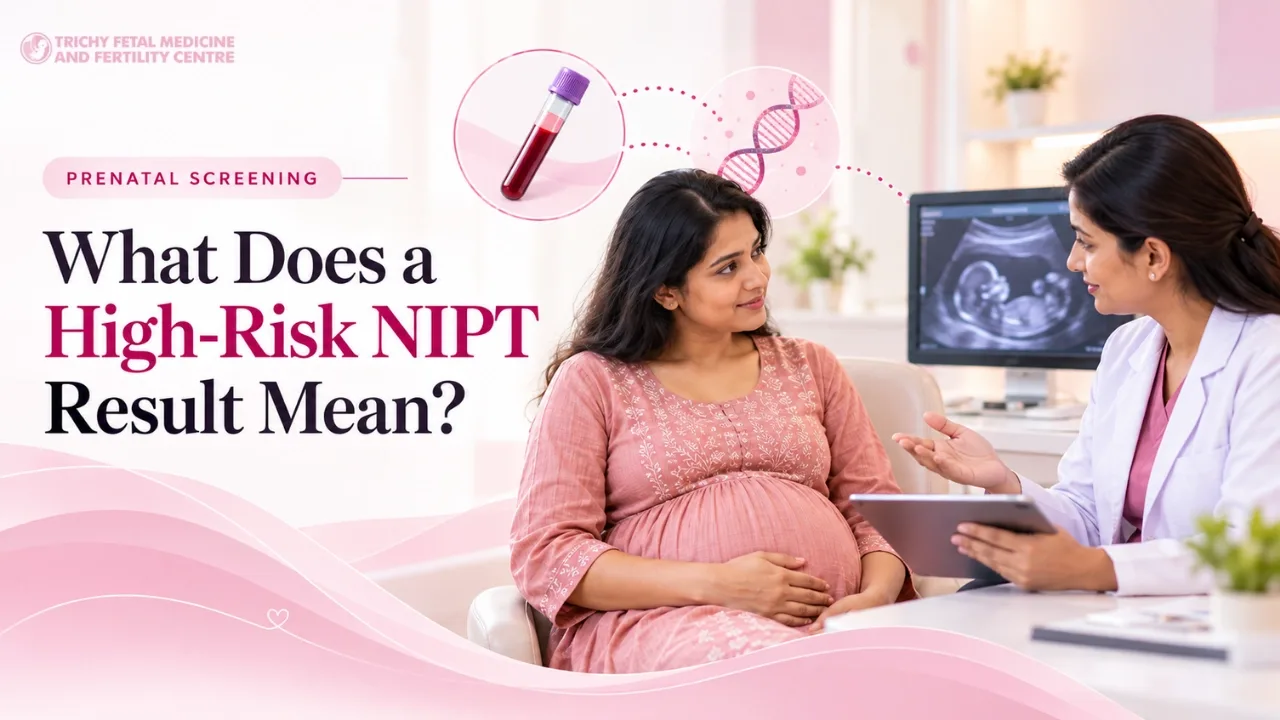
NIPT, or non-invasive prenatal testing, screens a mother's blood for fragments of DNA mainly from the placenta to estimate the chance of chromosomal conditions such as Down syndrome. Receiving a high-risk result is understandably frightening. It is important to know that NIPT is a screening test and a high-risk result is not a diagnosis.
The DNA tested in NIPT comes mostly from the placenta, not directly from the baby. In a condition called confined placental mosaicism, the placenta may have a chromosomal difference that the baby does not. Other factors, such as a vanished twin, maternal chromosomal variations or maternal conditions, can also affect results.
Positive predictive value is the chance that a high-risk result is truly correct. It is higher for Down syndrome than for rarer conditions and varies with maternal age and the baseline risk. Your counsellor can explain what your specific result means for you.
A specialist explains the result, the condition involved and your options in a calm, non-directive way.
A fetal medicine scan looks for physical signs that support or do not support the result.
No. Major decisions about the pregnancy should not be based on NIPT alone. Diagnostic confirmation is recommended.
A low-risk result means the chance of the screened conditions is low, but it does not guarantee a healthy baby. NIPT does not screen for all genetic conditions or structural problems, so the anomaly scan remains essential.
Waiting for further results can be stressful. Lean on your partner and family, ask questions, and accept support from your care team. You do not have to make any decisions immediately.
A high-risk result is the start of a conversation, not the end of the story. Specialist counselling and confirmation testing give you accurate information. Dr Malathi G. Prasad provides NIPT counselling, fetal medicine scans and diagnostic testing in Trichy.
You can read about how we run the genetic counselling at our centre, and who performs it, on the team page.
This guide is for general information and does not replace a consultation with a fetal medicine specialist.
In line with the PCPNDT Act, we do not perform or support sex determination.
Genetic Counselling
In-house counselling that explains results, inheritance, and your options in clear language.
Card 1 of 3
Call us, message us on WhatsApp, or send a request and our team will call you back to schedule your visit.
Mon - Fri: 9:00 AM - 9:00 PM