Screening and tests
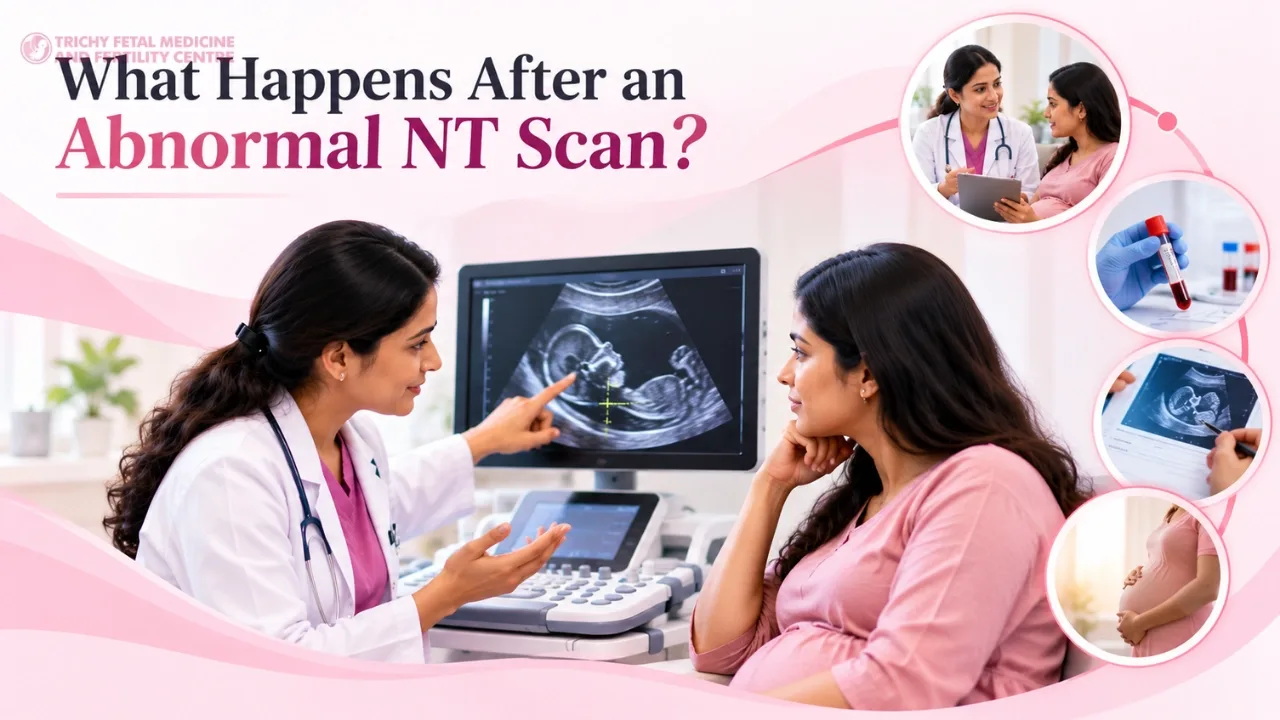
What Happens After an Abnormal NT Scan?
An abnormal NT scan raises a question and does not give a final answer. Here is how doctors usually work through it, step by step.
Reviewed24 October 20268 min read

NIPT can be used in twin pregnancies, but results are interpreted differently. Learn how reliable it is, its limits with twins and IVF, and what follow-up is advised.
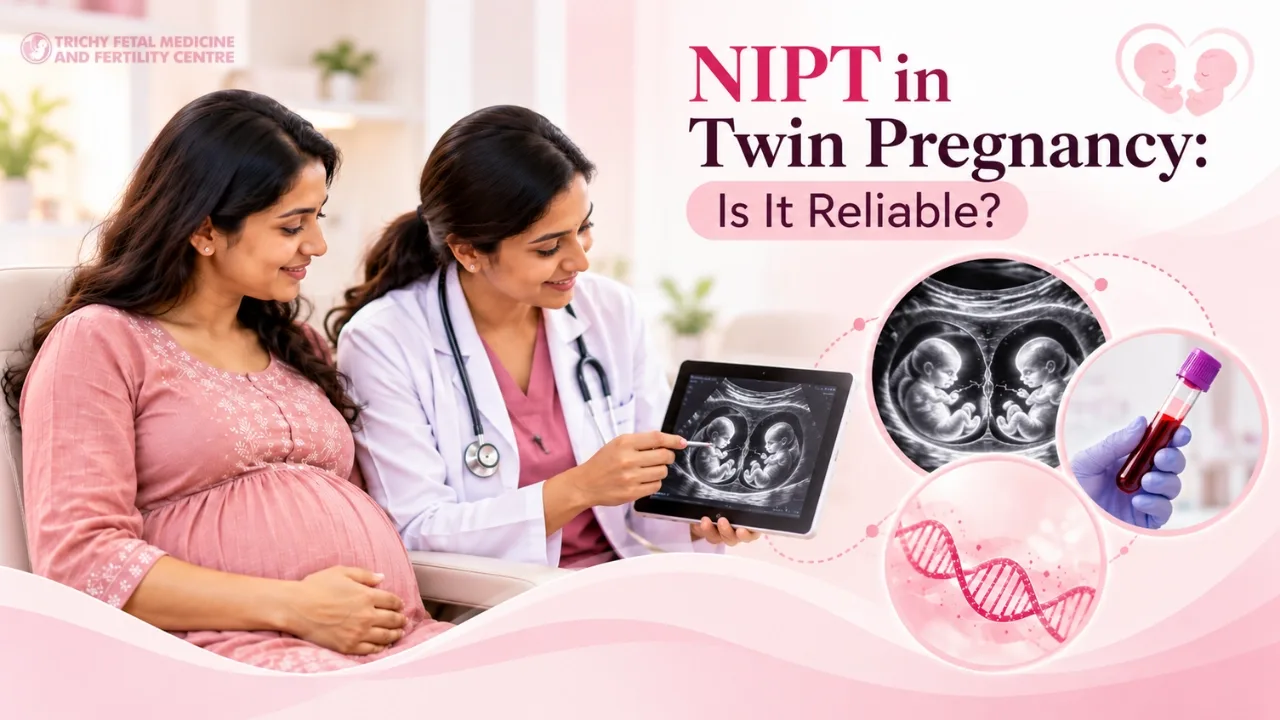
Non-invasive prenatal testing (NIPT) analyses fragments of placental DNA in the mother's blood to screen for chromosomal conditions. In twin pregnancies, interpreting NIPT is more complex because DNA comes from two placentas or one shared placenta, and the contribution from each baby can differ.
In twins, cell-free DNA comes from both placentas. If one twin has a chromosomal condition, its DNA may be diluted by the healthy twin's DNA.
NIPT cannot usually tell which twin is affected in non-identical twins.
The proportion of fetal DNA from each baby may be lower, which can lead to a failed or inconclusive result more often than in singletons.
If one twin stopped developing early, its DNA can remain in the mother's blood and cause a false result.
Studies suggest NIPT detects most cases of Down syndrome in twin pregnancies, with low false-positive rates. Data for trisomy 18 and 13 are fewer, so results are interpreted more cautiously. Some laboratories also report limitations for other conditions in twins.
Yes. Monochorionic twins usually share the same genetic makeup, so a result generally applies to both. Dichorionic twins may be non-identical, so the result may apply to one or both. Chorionicity is best determined by early ultrasound.
NIPT can be done in IVF twin pregnancies, though factors such as donor eggs or vanished twins should be shared with the laboratory and doctor.
The NT scan at 11 to 14 weeks assesses each twin individually, checks chorionicity and early anatomy, and helps interpret risks for each baby. It is strongly recommended in twin pregnancies.
Counselling and diagnostic testing, usually amniocentesis or CVS of each baby as needed, are recommended. A fetal medicine specialist performs these with care to sample the correct twin.
NIPT is a useful screening option in twin pregnancies when combined with expert ultrasound and counselling. Dr Malathi G. Prasad provides twin pregnancy scans, NIPT counselling and diagnostic testing in Trichy.
If your doctor has suggested this, our twin specialised clinic page lists what is included and how to book; the team is happy to talk it through first.
This guide is for general information and does not replace a consultation with a fetal medicine specialist.
In line with the PCPNDT Act, we do not perform or support sex determination.
Twin Specialised Clinic
Specialist monitoring and care for twin and multiple pregnancies.
Card 1 of 3
Call us, message us on WhatsApp, or send a request and our team will call you back to schedule your visit.
Mon - Fri: 9:00 AM - 9:00 PM