Screening and tests
What Happens After an Abnormal NT Scan?
An abnormal NT scan raises a question and does not give a final answer. Here is how doctors usually work through it, step by step.
Reviewed24 October 20268 min read

NIPT is a blood test that screens for Down syndrome from about 10 weeks of pregnancy. Learn what it can and cannot tell you, and what happens next.
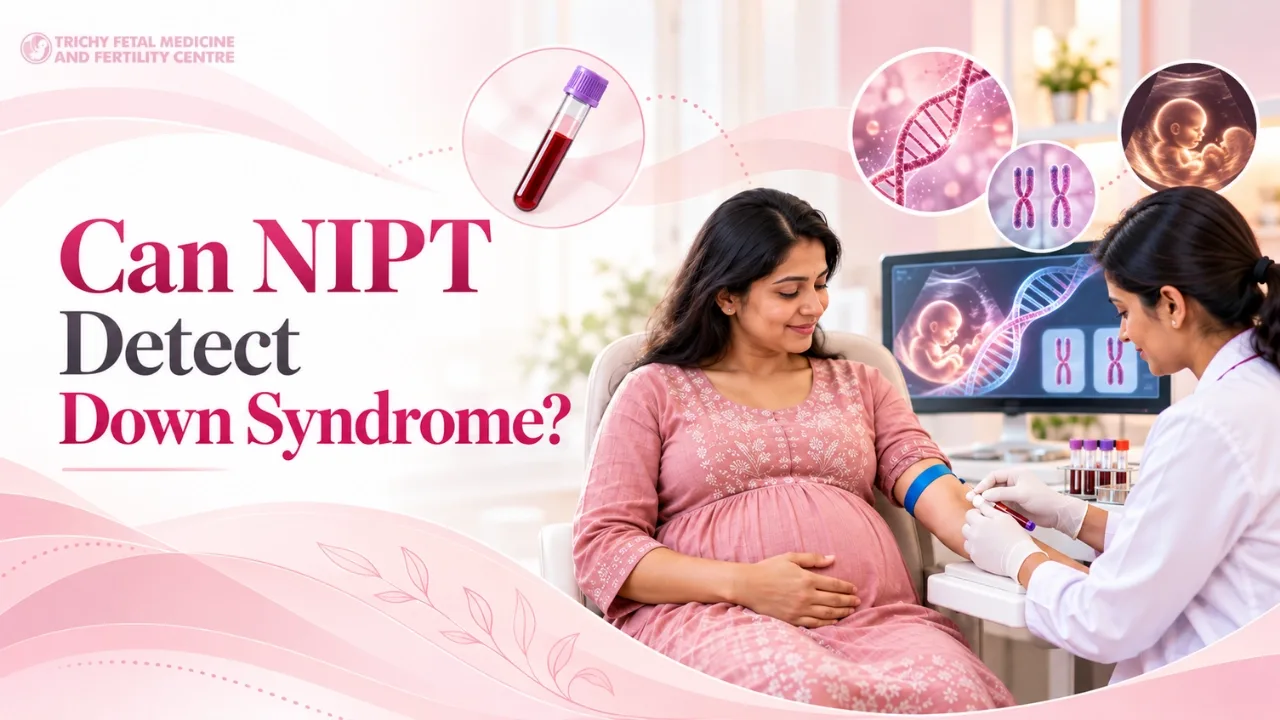
During pregnancy, tiny fragments of the baby's DNA circulate in the mother's blood. NIPT reads these fragments and checks whether there is an extra copy of chromosome 21, which causes Down syndrome. It can also look at chromosomes 18 and 13, and sometimes the sex chromosomes.
Because only a blood sample from the mother is needed, there is no risk to the baby from the test itself.
NIPT can be offered to any pregnant woman. It is especially useful when:
A low-risk result is reassuring, but the routine scans should still be done. A high-risk result does not mean the baby definitely has Down syndrome. Your doctor will usually advise a diagnostic test such as amniocentesis or CVS, along with counselling, so you can take decisions with full information.
Choosing a prenatal test can feel overwhelming. Dr Malathi G. Prasad at Trichy Fetal Medicine and Fertility Centre in Trichy can explain which test suits your pregnancy and help you understand the results in plain language.
When you are ready, the NIPT service page covers timings and preparation; questions about your own situation are best put to our specialists.
This guide is for general information and does not replace a consultation with a fetal medicine specialist.
In line with the PCPNDT Act, we do not perform or support sex determination.
NIPT
A simple blood test from the mother that screens for common chromosomal conditions, with no risk to the baby.
Card 1 of 3
Call us, message us on WhatsApp, or send a request and our team will call you back to schedule your visit.
Mon - Fri: 9:00 AM - 9:00 PM