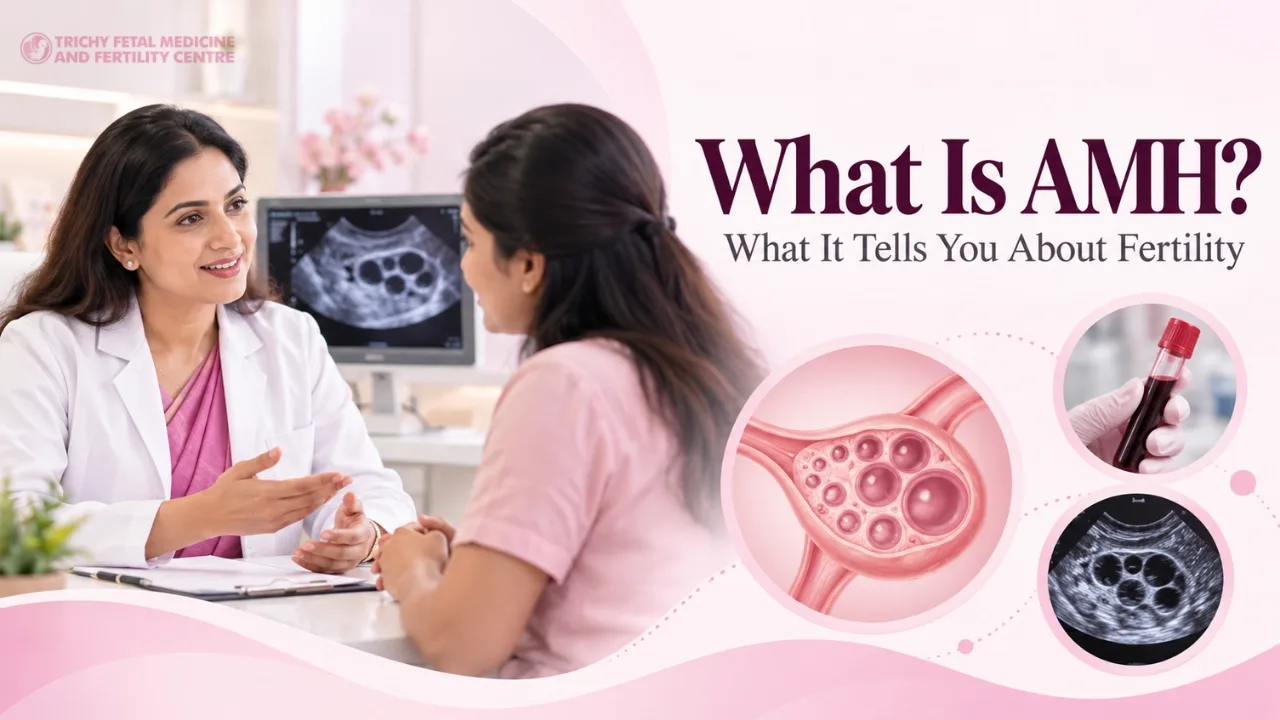
Low AMH and PCOS can both cause irregular cycles, but they are opposite problems. Learn how they differ in egg reserve, tests and treatment, and what each means for you.
Low AMH and PCOS are almost opposite conditions. Low AMH means fewer eggs remain in the ovaries. PCOS usually means many small follicles but irregular ovulation, and AMH is often high. Both can delay pregnancy, but they need different treatment plans, so knowing which one you have matters.
What is low AMH?
AMH is a hormone released by small follicles in the ovaries. A low level suggests fewer eggs are left. It is more common after 35, but can also happen earlier because of genetics, ovarian surgery, endometriosis, smoking or chemotherapy.
Women with low AMH may still have regular periods and ovulate every month.
What Is PCOS?
PCOS is a hormone and metabolic condition. The ovaries contain many small follicles that start growing but often stop before ovulation. Androgen levels and insulin are often raised, and periods are irregular. AMH is usually high because of the many follicles.
How do they compare?
Egg reserve
Low AMH: fewer eggs remain
PCOS: many eggs, but ovulation is irregular
Periods
Low AMH: often regular; cycles may shorten as reserve falls
PCOS: often irregular or absent
Ultrasound
Low AMH: few small follicles in the ovaries
PCOS: many small follicles in each ovary
Other signs
Low AMH: usually none
PCOS: acne, excess hair, weight gain or darkened skin patches may appear
Response to fertility medicines
Low AMH: fewer eggs grow, so higher doses may be needed
PCOS: ovaries may over-respond, so doses are kept low and closely monitored
Can you have both?
It is uncommon, but possible. A woman with PCOS can have AMH falling with age, and her AMH may appear normal while ovulation is still irregular. This is why doctors read AMH along with age, scans and symptoms.
How is each treated?
Low AMH: The focus is on not delaying. Doctors may advise trying sooner, ovulation support, IUI or IVF depending on age and other results. Egg freezing may be discussed for women who want to delay pregnancy.
PCOS: The focus is on restoring ovulation. Lifestyle changes, letrozole and careful monitoring help most women. IVF is kept for those who do not respond.
What to do next
Two women with irregular cycles can have very different reasons behind them. Getting the right diagnosis prevents wasted time and the wrong medicines. For a clear explanation of your AMH and scan reports, you can consult Dr Malathi G. Prasad, a fetal medicine specialist at Trichy Fetal Medicine and Fertility Centre in Trichy.
When you are ready to talk it through, our specialists will look at your history and suggest what fits.