Learn the signs of ovulation, from cervical mucus to body temperature, plus the tests that confirm it. Find out when tracking is not enough and a scan helps.
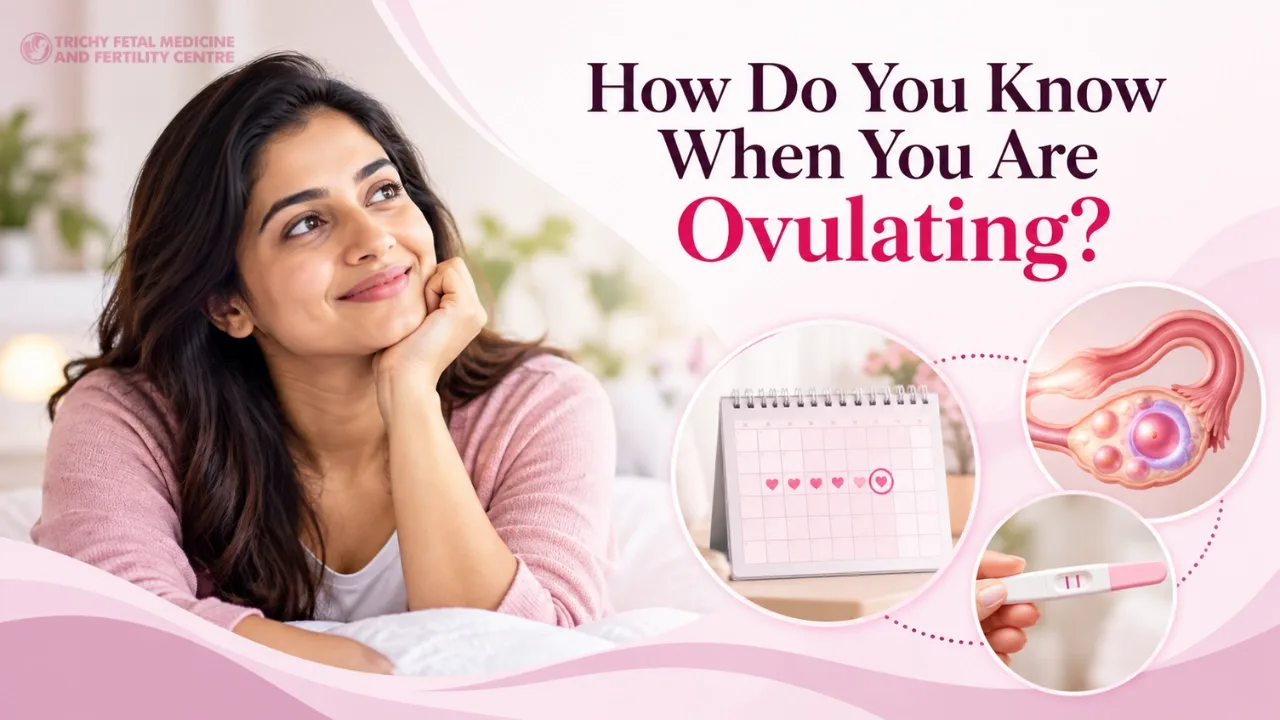
You can often tell you are ovulating from body signs such as clear, stretchy cervical mucus, a small rise in body temperature after ovulation and mild one-sided pelvic pain. Urine ovulation kits and ultrasound scans give more certainty. Knowing your fertile window helps you time intercourse better.
What Is Ovulation?
Ovulation is the release of a mature egg from the ovary. The egg survives for about 12 to 24 hours. Sperm can live for up to 5 days. So the fertile window is about 5 days before ovulation plus the day of ovulation itself.
When does ovulation happen?
In a regular 28-day cycle, ovulation is often around day 14. But cycles differ. A simple guide is to count back 14 days from the expected start of your next period. If your cycle is 32 days, ovulation is likely around day 18.
What are the body signs of ovulation?
Cervical mucus changes
Around ovulation, vaginal discharge becomes clear, slippery and stretchy, like raw egg white. This helps sperm move. After ovulation, it becomes thicker or drier.
Basal body temperature
Your resting temperature rises slightly, by about 0.3 to 0.5 degrees Celsius, after ovulation. Taking it each morning before getting out of bed shows a pattern over a few months. It confirms ovulation after it has happened, so it is better for learning your pattern than for timing.
Mild pelvic pain
Some women feel a twinge or ache on one side of the lower belly, called mittelschmerz.
Other signs
Breast tenderness, a slight increase in sex drive and light spotting can also appear around this time.
Which tests can confirm ovulation?
LH urine kits: detect the hormone surge 24 to 36 hours before ovulation
Day 21 progesterone test: a blood test in the second half of the cycle that confirms ovulation happened
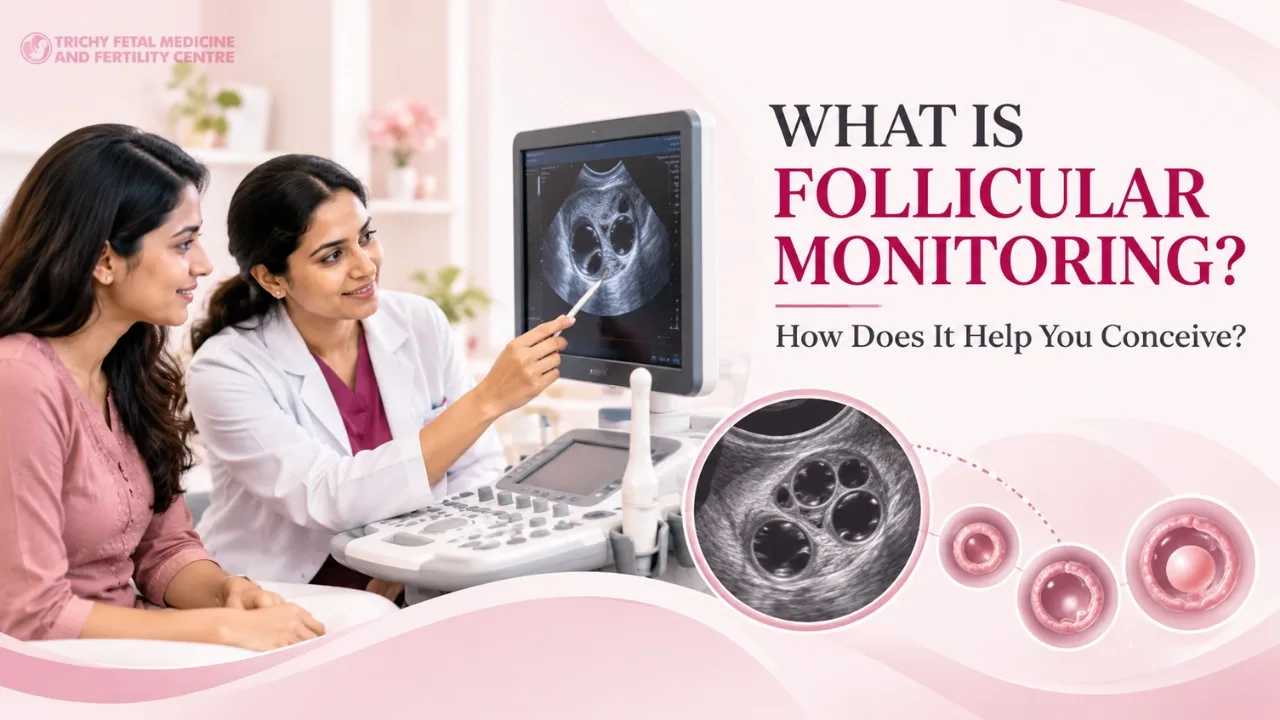
[Follicular monitoring](/guides/follicular-monitoring-ovulation-scan): ultrasound scans that track the growing follicle and show its release
When is home tracking not enough?
See a doctor if:
Your cycles are shorter than 21 days or longer than 35 days
You have tried for 12 months, or 6 months if you are over 35
The takeaway
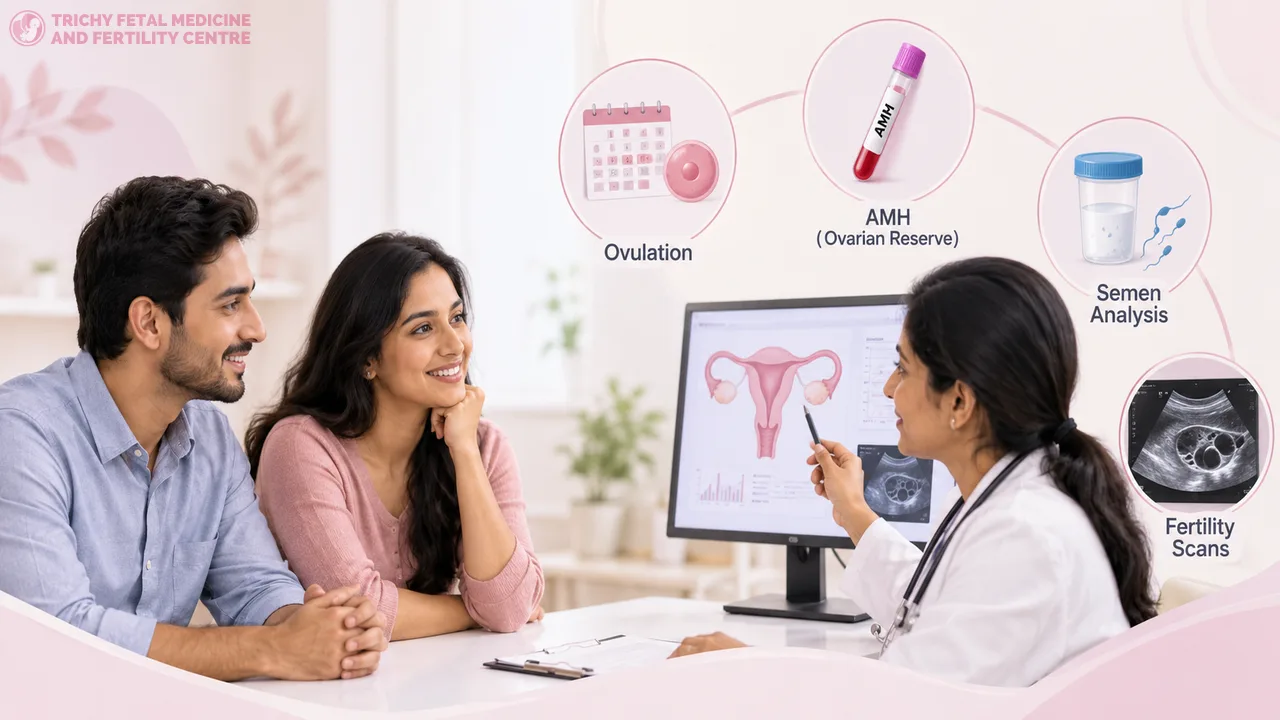
Learning your body's signs is a helpful first step, and many couples conceive with simple tracking. If your cycles are irregular or months pass without success, a scan-based check can save time. For help confirming ovulation, you can consult Dr Malathi G. Prasad, a fetal medicine specialist at Trichy Fetal Medicine and Fertility Centre in Trichy. For the broader picture, see our guide to Fertility Testing for Couples.
If you want a specialist opinion on your own situation, the team is a call or a visit away.