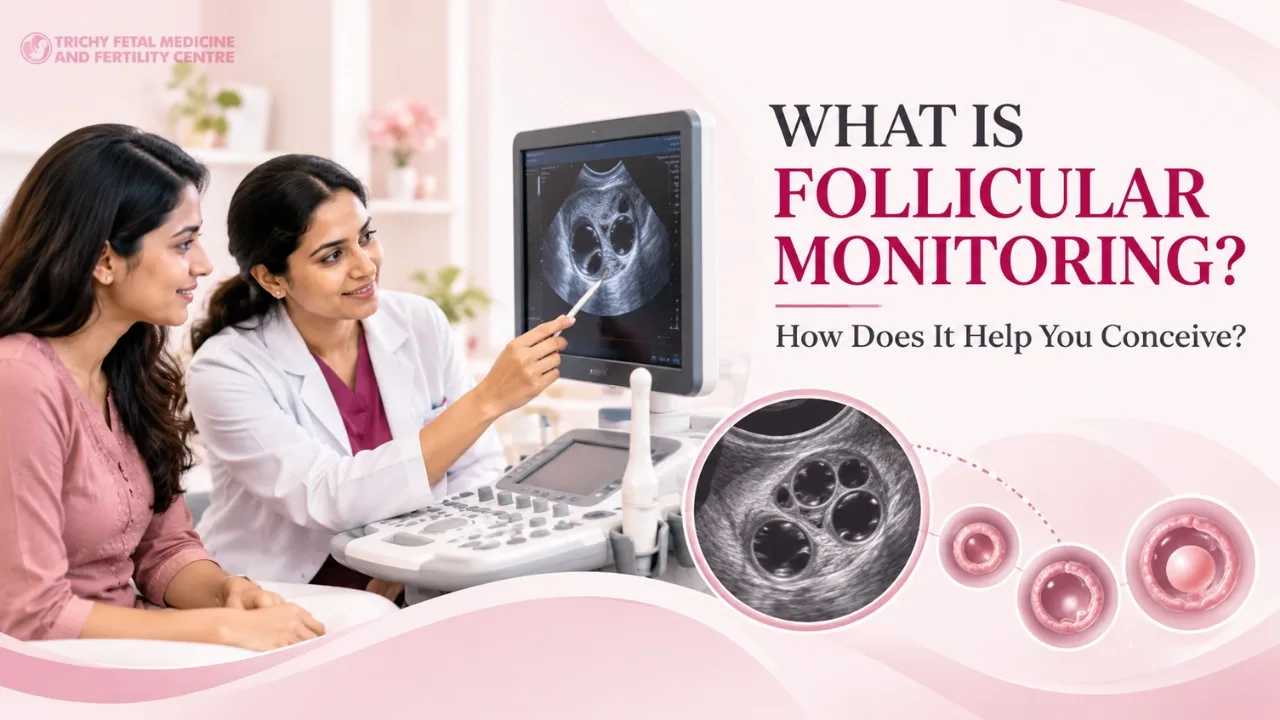
Follicular monitoring uses a series of scans to track egg growth and pinpoint ovulation. Learn how it works, how many scans you need and who benefits most from it.
Follicular monitoring is a series of ultrasound scans that track how an egg grows inside the ovary during your cycle. It shows whether you are ovulating and when the egg is likely to be released. This helps couples time intercourse or treatments such as IUI for the best chance of pregnancy.
What Is a Follicle?
A follicle is a small fluid-filled sac in the ovary that holds an egg. Each month, several follicles start growing, but usually one becomes dominant. When it reaches around 18 to 24 mm, it is ready to release the egg. This release is ovulation.
How is follicular monitoring done?
The scan is done through the vagina because it gives the clearest view of the ovaries. It is quick and usually painless.
A typical schedule looks like this:
First scan: around day 8 to 10 to see which follicle is growing
Follow-up scans: every 1 to 3 days to measure growth
Ovulation scan: once the follicle is mature, to confirm it has ruptured
The doctor also checks the lining of the uterus, called the endometrium, because a healthy lining helps the embryo implant.
Women taking ovulation medicines such as letrozole or clomiphene
Couples planning IUI or timed intercourse
How does it help you conceive?
The egg survives for only about 12 to 24 hours after release, while sperm can live for a few days. So the most fertile time is the few days before and on the day of ovulation. Scans help you know exactly when that window is, which removes guesswork.
If ovulation does not happen, monitoring shows this early. The doctor can then change medicines or plan the next step.
Can a trigger injection be used?
When the follicle is mature, some doctors give an hCG trigger injection to make the egg release at a known time. Intercourse or IUI is then timed accordingly, usually within 24 to 36 hours.
Is it better than ovulation kits?
Ovulation kits detect an LH surge in urine. They are helpful but cannot confirm whether the egg was actually released, and they can be misleading in PCOS. Ultrasound shows what is truly happening in the ovary.
What this means for you
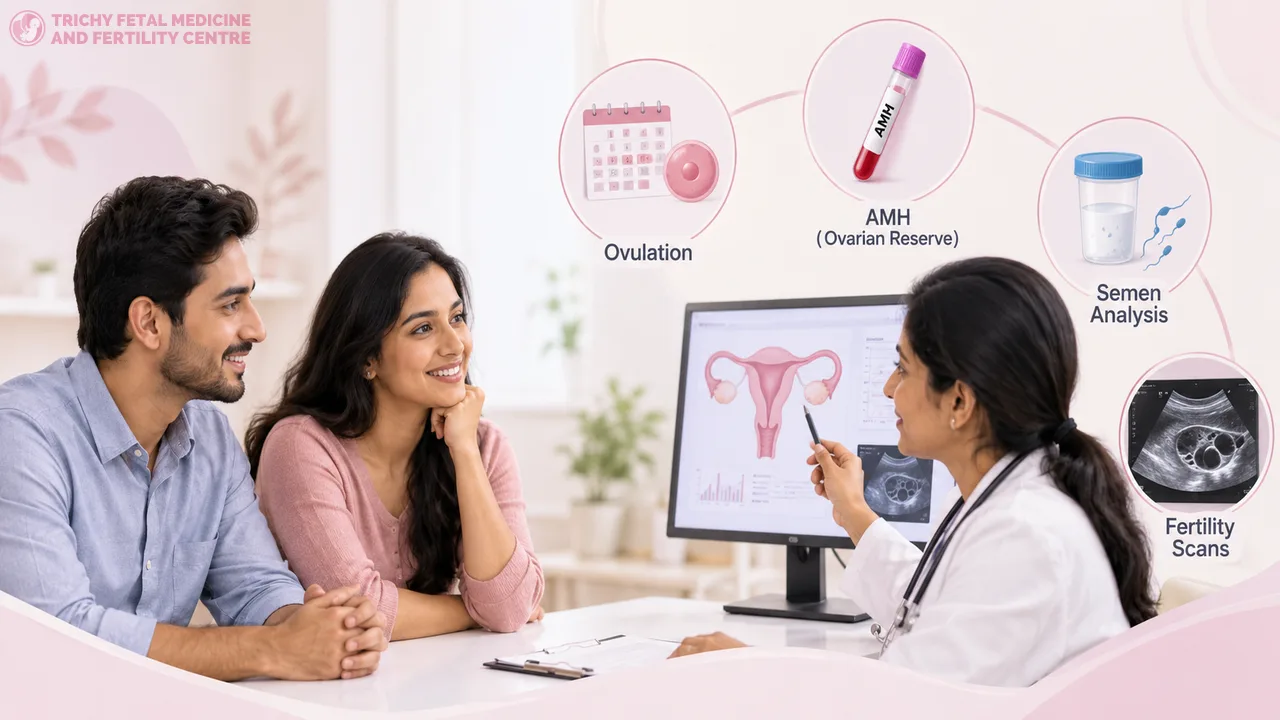
Follicular monitoring turns a guessing game into a clear plan. It is simple, safe and very useful for couples who want to understand their cycle. To begin cycle tracking with expert scans, you can consult Dr Malathi G. Prasad, a fetal medicine specialist at Trichy Fetal Medicine and Fertility Centre in Trichy. For the broader picture, see our guide to Fertility Testing for Couples.
When you are ready to talk it through, our specialists will look at your history and suggest what fits.