Fertility Tests for Women Before Starting Treatment
Wondering which fertility tests a woman needs? Learn the basic checks for ovulation, hormones, tubes and the uterus before treatment, and when to book them in Trichy.
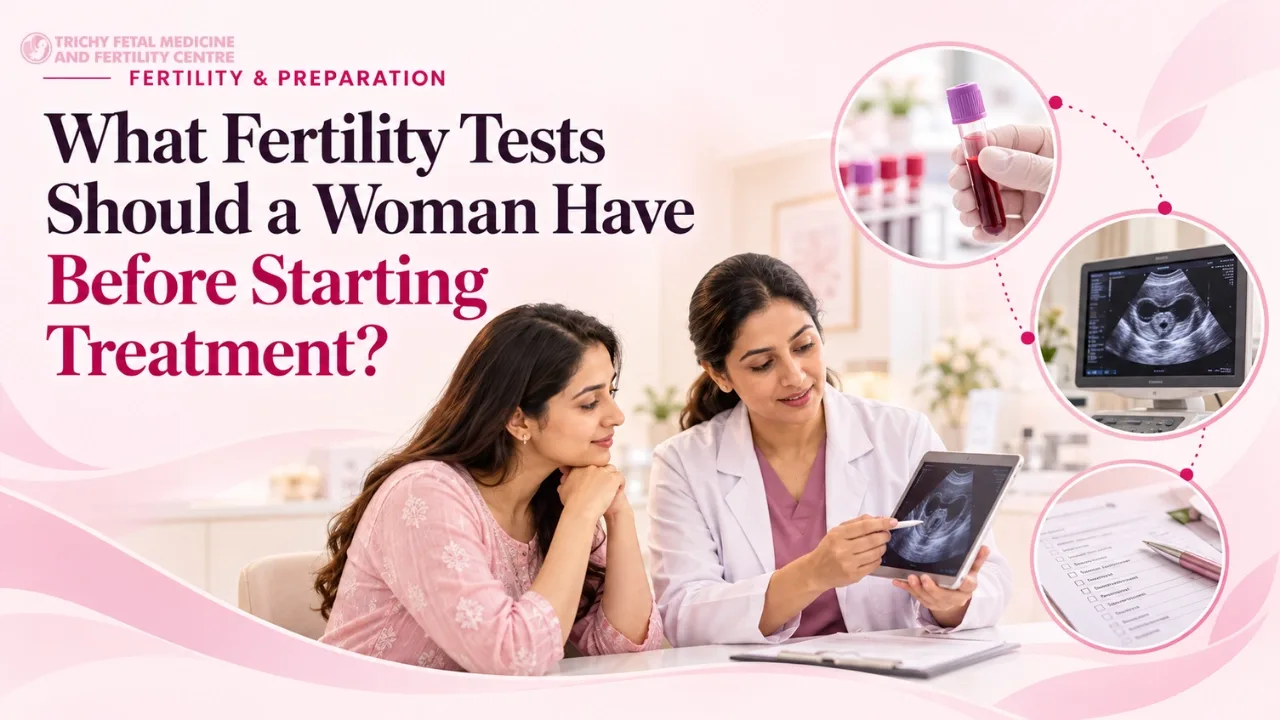
A woman usually needs a few basic tests before any fertility treatment starts. These tests check ovulation, hormone levels, the fallopian tubes and the uterus. They help the doctor find the cause of the delay and choose the right treatment, so you avoid guesswork and wasted months.
When should you start testing?
Doctors usually advise a fertility check if:
You are under 35 and have tried for 12 months without pregnancy
You are 35 or older and have tried for 6 months
Your periods are very irregular or absent
You have known conditions such as PCOS, endometriosis or thyroid problems
You have had pelvic infection or earlier surgery
If you are over 40, it is reasonable to see a specialist right away.
Which tests are done first?
History and examination
The doctor asks about your cycles, past pregnancies, medicines, weight changes and your partner's health. A general and pelvic exam is often done. This conversation guides every test that follows.
Pelvic ultrasound
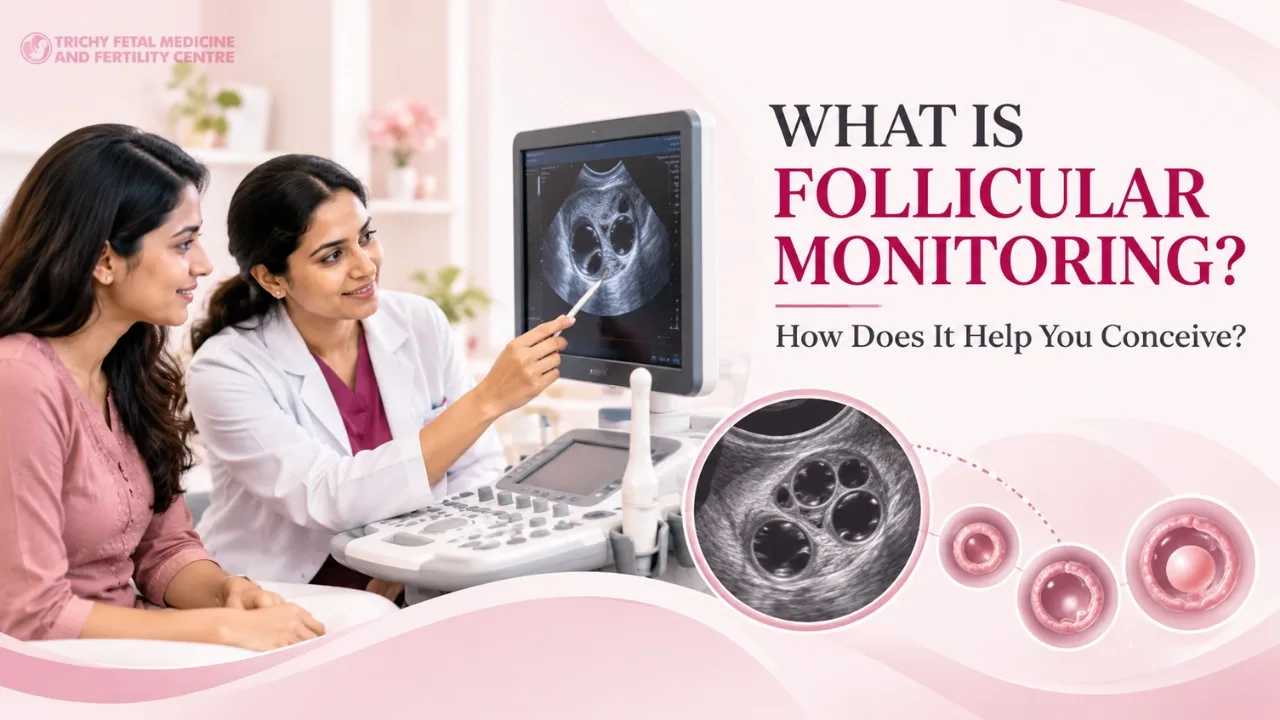
A scan checks the uterus and ovaries. It can show fibroids, polyps, cysts, the shape of the uterus and the number of small follicles in the ovaries.
Hormone blood tests
Common tests include:
AMH, which reflects egg reserve
FSH and estradiol, often on day 2 or 3 of the period
TSH, to check thyroid function
Prolactin, since high levels can stop ovulation
Progesterone, in the second half of the cycle, to confirm ovulation
Tubal check
The fallopian tubes must be open for natural conception. Doctors may use an HSG (an X-ray with dye) or a special ultrasound test to see if the tubes are clear.
Other tests when needed
Depending on your history, a hysteroscopy or laparoscopy may be advised to look inside the uterus or pelvis. Blood sugar, vitamin D and infection screening may also be added.
How do you prepare?
Note the dates of your last few periods
Carry old reports, scans and medicine lists
Ask whether any test needs a specific cycle day
Bring your partner if possible, since male factors are involved in about half of cases
What do results mean?
One result rarely tells the whole story. A low AMH, for example, points to fewer eggs but does not rule out pregnancy. A normal report does not guarantee a quick conception either. The specialist looks at all results together with your age and history.
The short version
Fertility testing can feel stressful, but it is mostly a simple, step-by-step process that gives clear direction. Starting early gives you more options and less uncertainty. For a personalised work-up, you can consult Dr Malathi G. Prasad, a fetal medicine specialist at Trichy Fetal Medicine and Fertility Centre in Trichy.
If you want a specialist opinion on your own situation, the team is a call or a visit away.