PCOS can delay or stop ovulation by upsetting hormones and insulin. Learn how it affects egg release, what signs to watch for and which treatments help restore it.
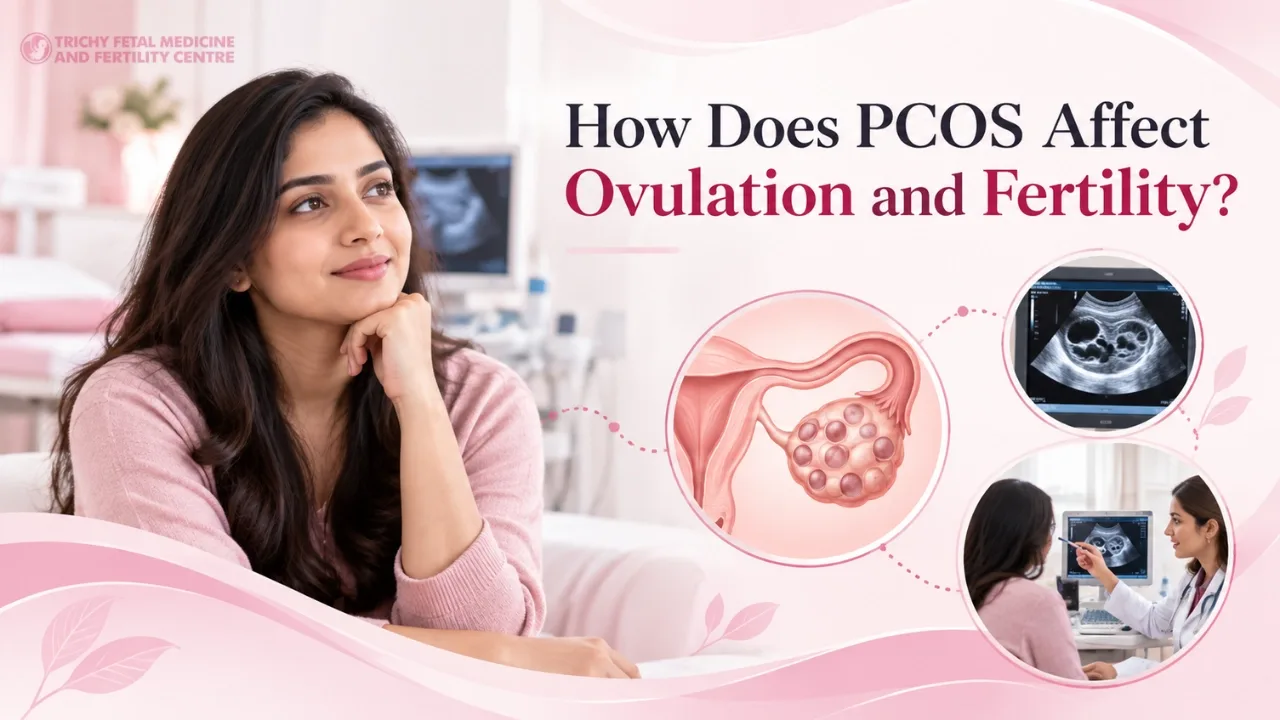
PCOS affects fertility mainly by disturbing ovulation. Higher levels of androgens (male-type hormones) and insulin stop follicles from maturing properly, so eggs are released less often or not at all. Fewer ovulations mean fewer chances of pregnancy, but with the right care most women with PCOS can ovulate and conceive.
What happens in a normal cycle?
Each month, hormones from the brain signal the ovaries to grow follicles. One follicle becomes dominant, matures and releases an egg. The other follicles stop growing. After ovulation, progesterone rises and prepares the uterus. If pregnancy does not happen, a period follows.
What changes in PCOS?
Hormone imbalance
Women with PCOS often have higher LH and androgen levels. This disturbs the signals that help one follicle become dominant.
Insulin resistance
Many women with PCOS have insulin resistance, where the body needs more insulin to control sugar. High insulin pushes the ovaries to make more androgens, which worsens the cycle problem.
Many small follicles
On ultrasound, the ovaries may show many small follicles. These are not true cysts. They are eggs that started growing but did not finish.
Missed ovulation
Without a mature follicle, the egg is not released. Progesterone stays low, periods become irregular and the uterine lining may build up without shedding properly.
What signs suggest PCOS is affecting fertility?
Periods that come more than 35 days apart or fewer than 8 or 9 times a year
Absent periods for months
Excess facial or body hair
Acne or oily skin
Weight gain, especially around the waist
Darkened skin patches on the neck or underarms
Does PCOS affect egg quality?
In most women, egg quality is mainly decided by age, not PCOS. Some studies suggest high insulin and hormone imbalance may affect eggs slightly, but many women with PCOS have good-quality eggs and respond well to treatment.
How is ovulation restored?
Lifestyle changes: a healthy diet, regular activity and modest weight loss if overweight
Ovulation tablets: letrozole is often the first choice, with clomiphene as an alternative
Metformin: sometimes added for women with insulin resistance
Injections: low-dose hormone injections if tablets do not work
Ovarian drilling or IVF: for selected women when other options fail
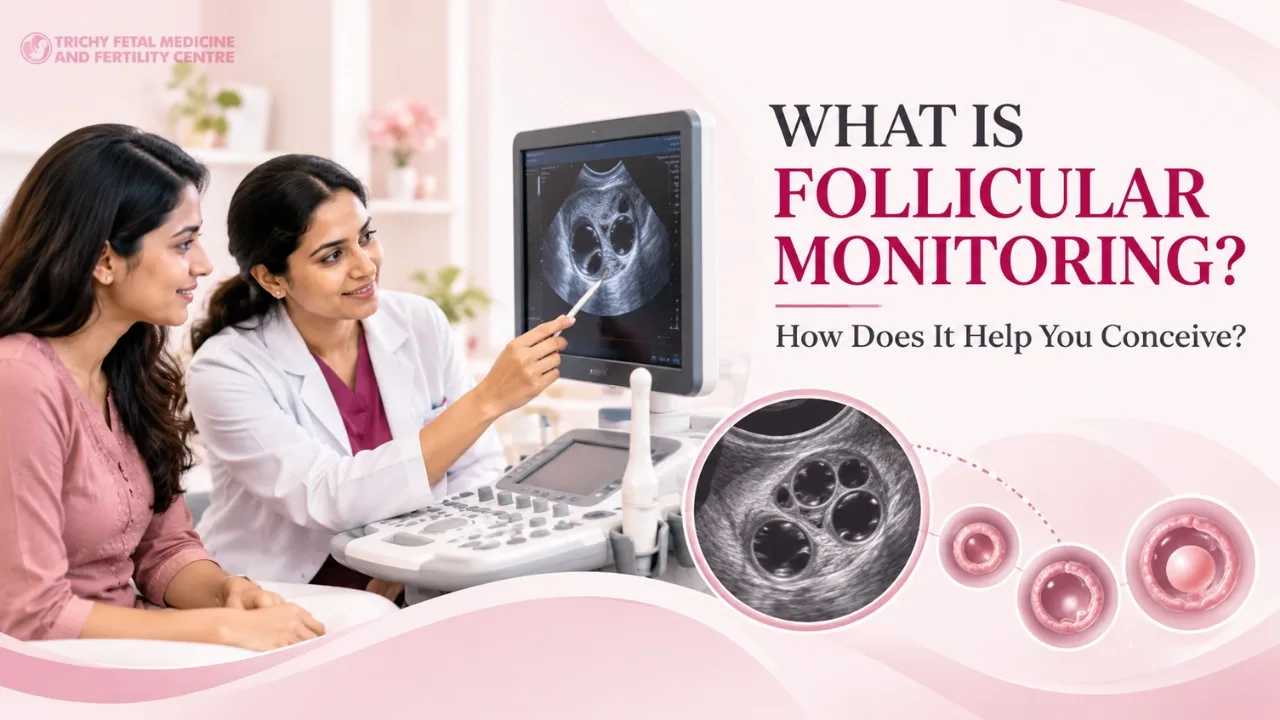
Follicular monitoring scans are used to check that the medicine is working and to avoid too many follicles growing.
Putting it together
Understanding how PCOS affects your cycle makes treatment feel less confusing. The problem is usually timing and frequency of ovulation, which is very treatable. For a clear diagnosis and ovulation plan, you can consult Dr Malathi G. Prasad, a fetal medicine specialist at Trichy Fetal Medicine and Fertility Centre in Trichy.
If any of this sounds familiar, our fetal medicine specialists can review your reports and tell you what the next step looks like.