Twin pregnancies need closer watching. Learn which complications doctors check for, from preterm birth to TTTS, and which warning signs need a call to your doctor.
Most twin pregnancies end with two healthy babies. Still, twins carry a higher chance of certain problems than a single baby, which is why doctors schedule extra scans and checks. Knowing what they look for helps you stay calm and spot warning signs in time.
Why do twins need extra monitoring?
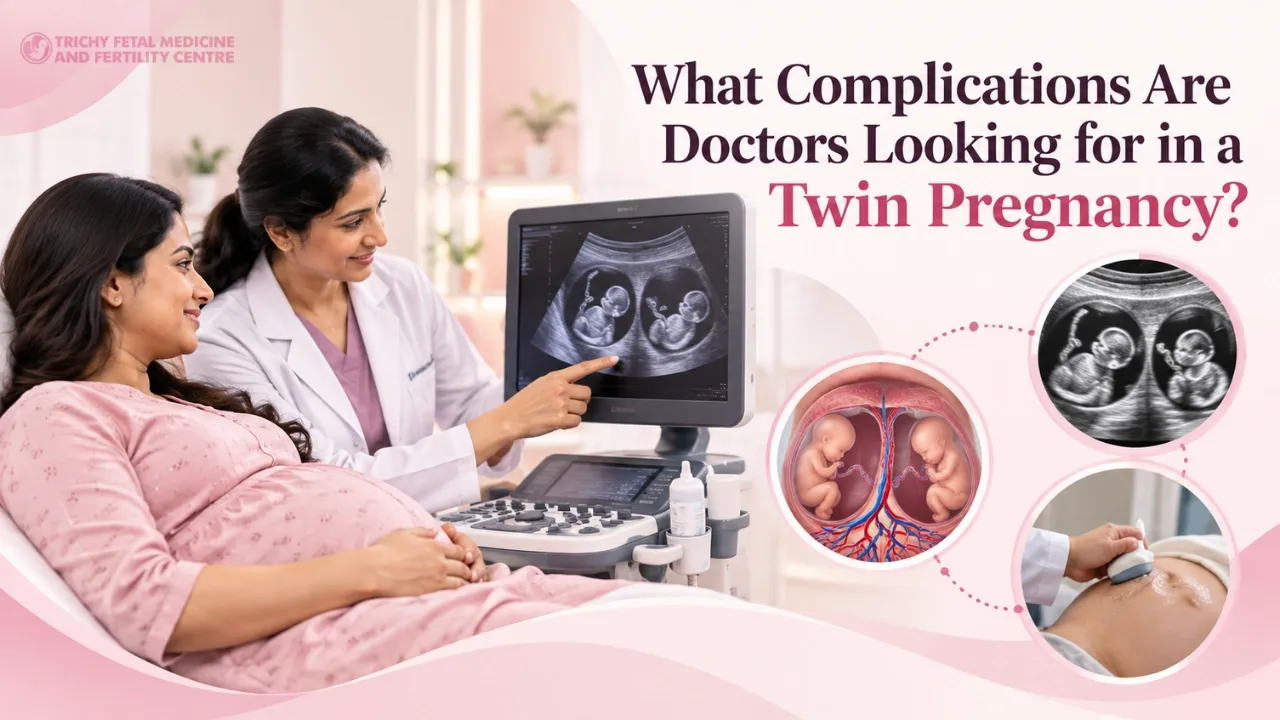
Two babies put more demand on the mother's body and the womb. The placenta also has to support two growing babies. This raises the chance of some complications, but it does not mean they will happen. Monitoring simply lets doctors act early.
What are the common complications?
Preterm birth
Twins are often born earlier than single babies. Many arrive before 37 weeks. Doctors may check cervical length on ultrasound and advise rest from heavy activity if the cervix looks short. Steroid injections may be given to help the babies' lungs if early birth seems likely.
Uneven growth
One baby may grow slower than the other. Doctors measure each baby's size and compare them. A clear gap can point to a placenta or blood flow problem, and may need closer scans.
Twin-to-twin transfusion syndrome (TTTS)
This happens only in twins who share a placenta. Blood flows unevenly, so one baby gets too much and the other too little. Scans every two weeks help catch it early, and treatment is available in specialist centres.
High blood pressure and pre-eclampsia
Mothers of twins have a higher chance of raised blood pressure. Blood pressure and urine are checked at every visit. Headache, blurred vision or sudden swelling should be reported at once.
Gestational diabetes
Sugar levels can rise during pregnancy. A glucose test is usually done in the second trimester, and diet changes or medicine can keep levels safe.
Anemia
Twins use up more iron and folic acid. Blood tests check for anemia, and supplements are usually advised.
Low fluid or excess fluid
Doctors check the fluid around each baby. Too little or too much can signal a problem with the placenta or the babies.
Which warning signs need urgent attention?
Call your doctor or go to the hospital if you notice:
Regular tightening or pain in the lower belly before 37 weeks
Leaking of fluid or any bleeding
Reduced baby movements
Severe headache, blurred vision or sudden swelling of the face or hands
Rapid belly growth over a few days
Fever or burning while passing urine
How can you lower your risk?
You cannot prevent every complication, but you can help:
Attend every scan and antenatal visit
Take iron, folic acid and calcium as advised
Eat balanced meals with enough protein
Rest well and avoid heavy lifting
Keep your blood sugar and blood pressure checks on schedule
What to do next
A twin pregnancy needs more attention, but it does not need constant worry. Each scan and test has a clear purpose, which is to keep both babies safe. If you are expecting twins and want a clear care plan, you can consult Dr Malathi G. Prasad, a fetal medicine specialist at Trichy Fetal Medicine and Fertility Centre in Trichy.