Pregnancy scans
Why Is a Doppler Scan Done During Pregnancy?
A Doppler scan checks blood flow to and within the baby. Learn why it is done, which vessels are measured, what results mean and when it is recommended.
Reviewed18 October 20265 min read

In a high-risk pregnancy, growth scans are usually repeated every two to four weeks, sometimes more often. Learn what decides the schedule.

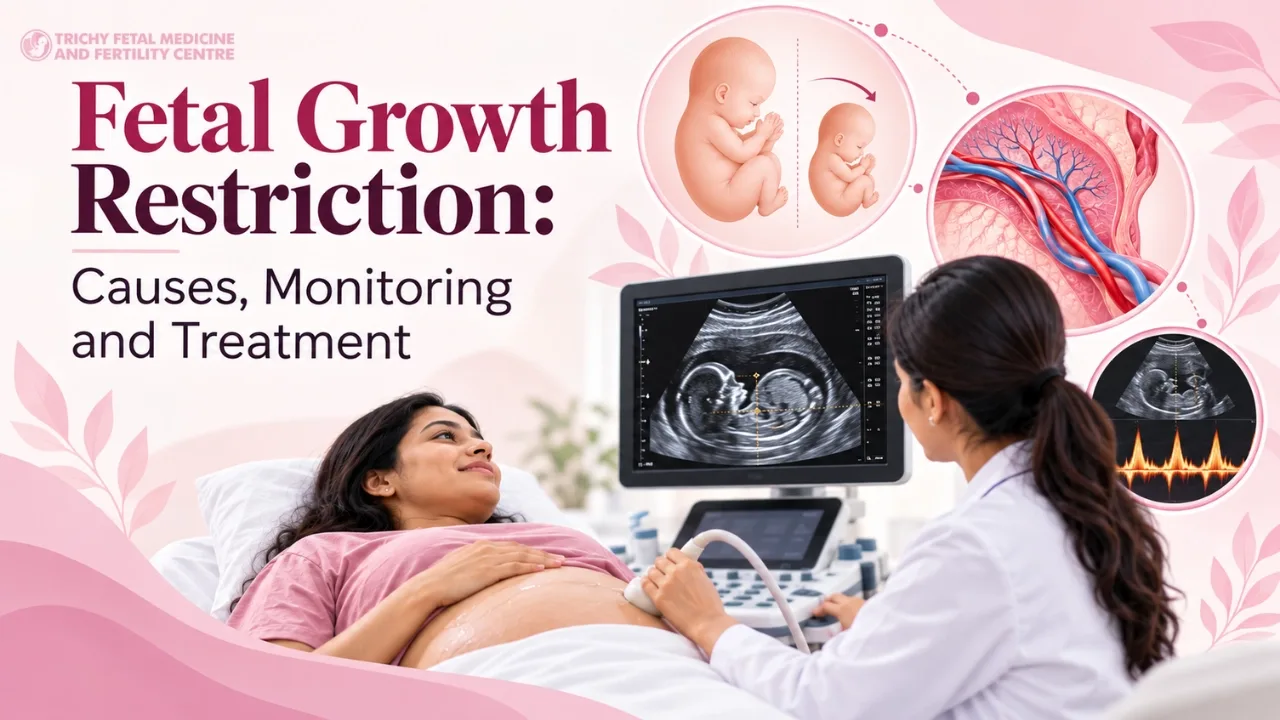
One scan shows the baby's size at one moment. Repeat scans show the pattern of growth, which is far more useful. Doctors compare measurements over time and look at fluid and Doppler blood flow to judge whether the baby is thriving.
The intervals above are general. Your doctor may choose a different plan.
Frequent scans are a way of staying one step ahead and keeping both mother and baby safe. Dr Malathi G. Prasad at Trichy Fetal Medicine and Fertility Centre in Trichy can set a follow-up plan suited to your pregnancy.
When you are ready, the growth scan with Doppler service page covers timings and preparation; questions about your own situation are best put to our specialists.
This guide is for general information and does not replace a consultation with a fetal medicine specialist.
In line with the PCPNDT Act, we do not perform or support sex determination.
Growth Scan with Doppler
A scan that tracks your baby's growth and blood flow, especially important in the later months.
Card 1 of 3
Call us, message us on WhatsApp, or send a request and our team will call you back to schedule your visit.
Mon - Fri: 9:00 AM - 9:00 PM