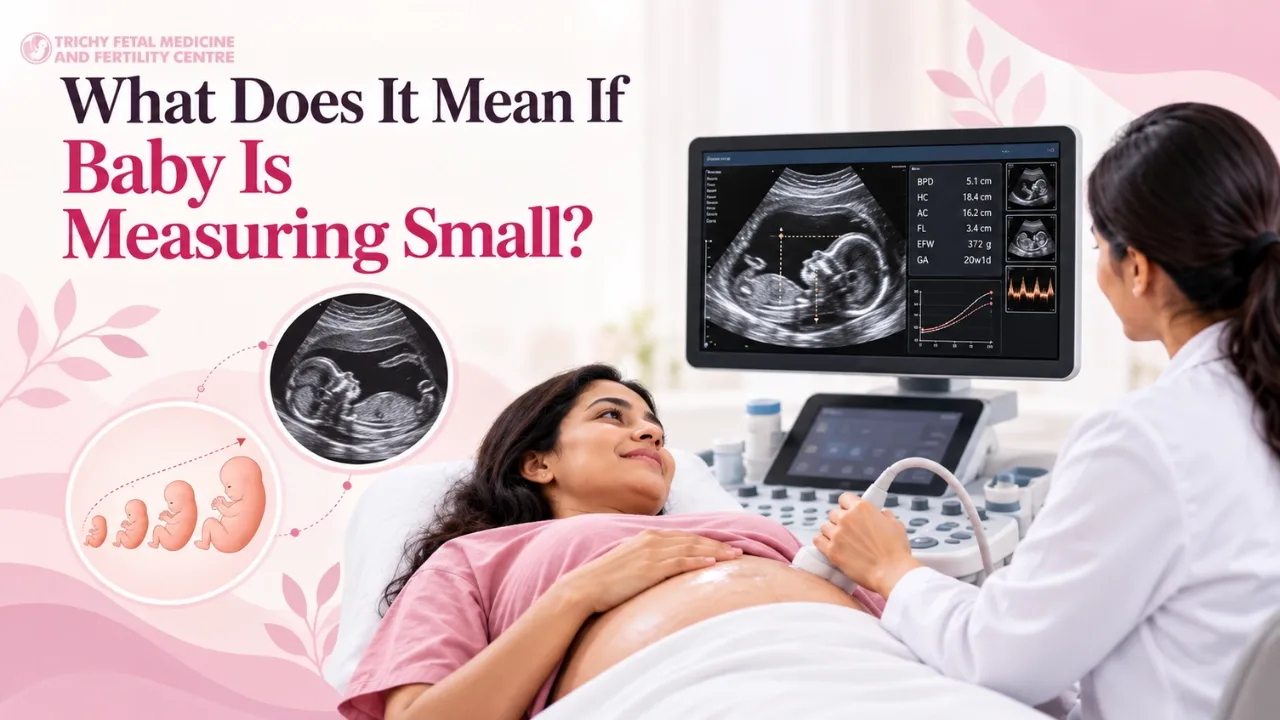
Some babies are small because their parents are small, or because of their genes. Their growth is steady, the fluid is normal and blood flow is normal. These babies usually do well, though they are watched.
Fetal growth restriction (FGR)
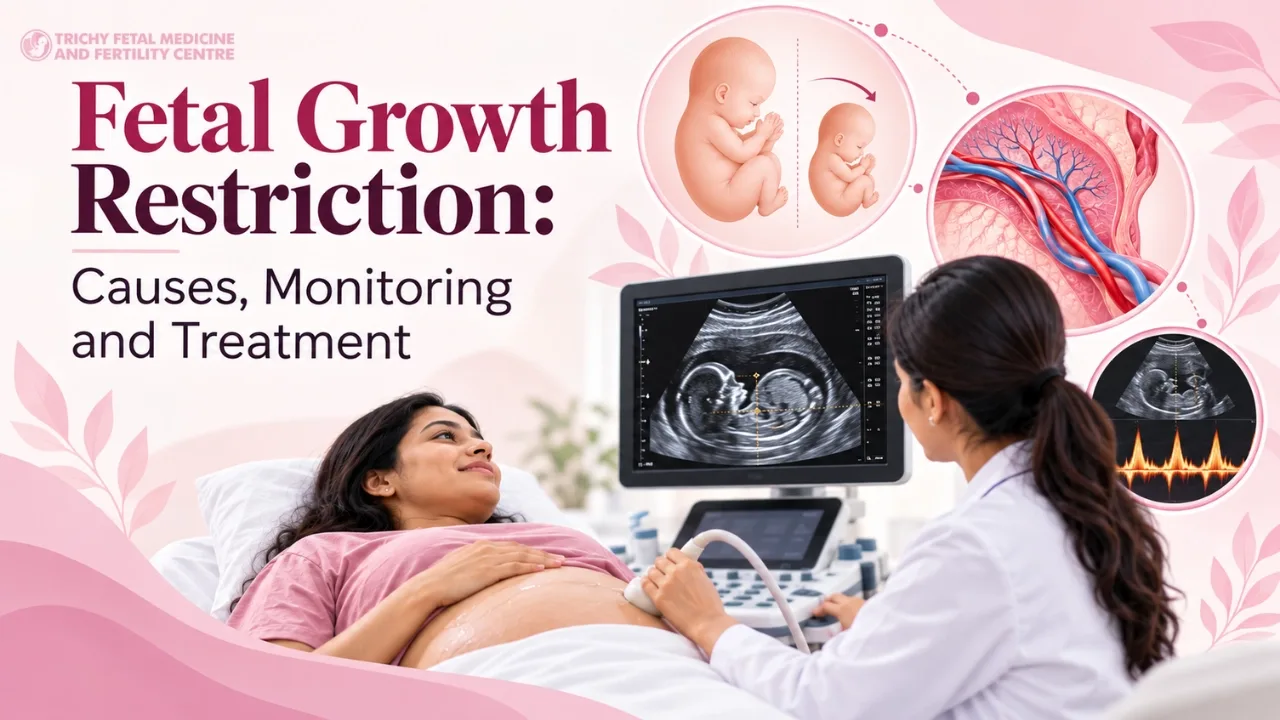
In FGR, the baby is not reaching its growth potential, often because the placenta is not supplying enough nourishment. This needs closer monitoring because it can affect the baby's wellbeing.
Possible Reasons
Placental problems.
High blood pressure or pre-eclampsia in the mother.
Infections during pregnancy.
Chromosomal or genetic conditions.
Smoking or exposure to harmful substances.
Poor maternal nutrition or medical illness.
Twin pregnancy.
Sometimes no cause is found.
How doctors tell the difference
Serial [growth scans](/guides/growth-scan-doppler-pregnancy-fetal-growth-restriction): to see whether the baby is following a steady growth curve.
[Doppler](/guides/why-doppler-scan-during-pregnancy) studies: to check blood flow in the umbilical cord and baby's vessels.
Amniotic fluid assessment.
Tests for infection or genetic causes where needed.
What can be done
There is no medicine that makes a small baby grow faster in every case. Care focuses on treating the cause where possible, such as controlling blood pressure, advising rest and nutrition, monitoring closely with scans and heart-rate tracking, and planning the timing and place of delivery. Your fetal medicine specialist will guide this.
When to call your doctor
Reduced baby movements, bleeding, leaking fluid or severe headaches should be reported promptly.
A few things to hold on to
Hearing that your baby is small is worrying, but the right monitoring makes a real difference. Dr Malathi G. Prasad at Trichy Fetal Medicine and Fertility Centre in Trichy can assess the cause and plan careful follow-up.
To arrange this at our Trichy centre, see growth scan with Doppler; if you are unsure whether you need it, our doctors can tell you after a review.