Fetal growth restriction means a baby is not growing as expected in the womb. Learn the causes, how it is diagnosed and monitored, and how delivery timing is decided.
Fetal growth restriction, also called FGR or intrauterine growth restriction (IUGR), means a baby is not growing to its expected size in the womb. It is different from a baby who is simply small but healthy. Identifying FGR early allows careful monitoring and timely delivery.
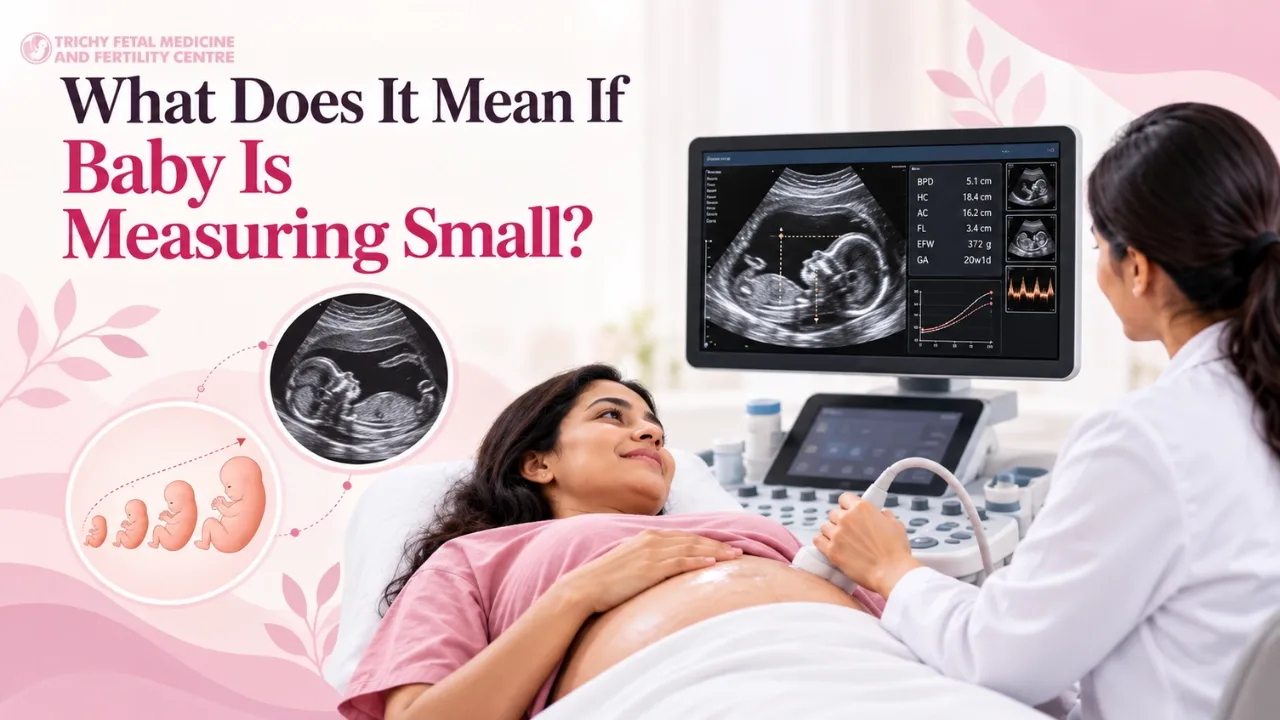
What is the difference between small and growth restricted?
Some babies are constitutionally small because their parents are small, and they are healthy. Growth-restricted babies are not reaching their growth potential, often because the placenta is not working well. Doppler and growth trends help tell them apart.
What causes FGR?
Placental causes
Placental insufficiency is the most common cause, where the placenta does not deliver enough oxygen and nutrients.
Maternal factors
High blood pressure, preeclampsia, diabetes with vascular disease, kidney disease, autoimmune conditions, smoking, poor nutrition, anaemia and some medicines.
Fetal factors
Chromosomal or genetic conditions, structural abnormalities and infections such as CMV.
Pregnancy factors
Twin pregnancies, especially those with shared placentas.
How is FGR diagnosed?
Fundal height measurements that are smaller than expected
Ultrasound estimates of fetal weight and abdominal circumference
Serial growth scans showing slowing growth
Doppler studies of umbilical, middle cerebral and other vessels
Amniotic fluid assessment
Accurate dating from an early scan is essential.
How is FGR monitored?
Growth scans every two to three weeks
Doppler scans as often as needed, sometimes weekly or more
Fetal heart rate monitoring
Maternal blood pressure and urine checks
Counting the baby's movements
Early-onset FGR, before about 32 weeks, usually needs more intensive monitoring.
What treatment is available?
There is no proven medicine that makes a growth-restricted baby grow. Management includes:
Treating maternal conditions such as blood pressure
Stopping smoking
Low-dose aspirin started early in pregnancy for women at high risk, as advised by the doctor
Steroid injections to help the baby's lungs if early delivery is likely
Magnesium sulphate for neuroprotection in very preterm delivery, as indicated
How is delivery timing decided?
Doctors balance the risks of staying in the womb against the risks of early birth. Decisions consider gestational age, growth trends, Doppler results, fluid and fetal heart monitoring. Delivery may be by induction or caesarean section depending on the situation.
What matters most
FGR needs expert monitoring and careful decisions about timing. With good surveillance, many growth-restricted babies are delivered safely and do well. Dr Malathi G. Prasad provides growth and Doppler monitoring for high-risk pregnancies in Trichy.